remote control excavator be used outdoors
A remote control excavator can absolutely be used outdoors, and in many cases, outdoor environments are where it performs best. Whether it is a toy designed for children, a hobby-grade model for enthusiasts, or a professional machine used in construction and industrial applications, outdoor use allows the excavator to demonstrate its full range of capabilities. From digging in sandboxes and gardens to working on construction sites and landscaping projects, these machines are designed to handle a variety of terrains and conditions. However, the effectiveness of outdoor operation depends on factors such as the quality of the excavator, the surface it operates on, weather conditions, and proper maintenance.
One of the biggest advantages of using a remote control excavator outdoors is the availability of natural materials like sand, dirt, gravel, and small rocks. These surfaces allow users to perform realistic digging, lifting, trenching, and loading tasks that closely resemble actual excavation work. Children can create miniature construction sites in a sandbox, while hobbyists often build detailed landscapes to test the capabilities of their machines. Professional remote-operated excavators are specifically engineered for demanding outdoor environments where safety and precision are essential.
A remote control excavator performs particularly well on loose soil and sand because these materials are relatively easy to move. The hydraulic or electric systems that power the boom, arm, and bucket allow the machine to scoop, transport, and dump material efficiently. Even smaller toy models can provide a satisfying digging experience when operated on soft ground. Larger hobby-grade and professional versions are capable of handling heavier materials and more challenging excavation tasks without sacrificing accuracy.
The terrain plays an important role in how well a remote control excavator performs outdoors. Flat and stable surfaces generally provide the best operating conditions because they allow the tracks to maintain good traction. Uneven ground, steep slopes, or areas with loose gravel may require more careful operation to prevent the machine from losing stability. High-quality models often feature durable tracks and powerful motors that improve performance on rough terrain, making them suitable for a wider variety of outdoor environments.
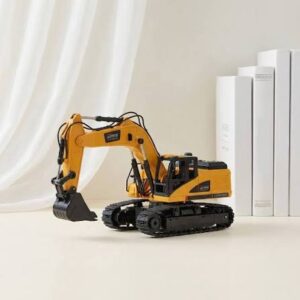
Many people enjoy using a remote control excavator in backyards, parks, gardens, and dedicated hobby tracks. These locations provide plenty of space to operate the machine safely while creating realistic excavation projects. Children can build roads, dig foundations for toy buildings, or transport soil from one location to another. Hobby enthusiasts frequently design complex construction scenes that include dump trucks, bulldozers, and cranes alongside the excavator, making outdoor play both entertaining and educational.
Weather conditions can influence the performance of a remote control excavator during outdoor use. Dry weather usually provides the most favorable conditions because the machine can move easily across the ground without excessive resistance. Wet soil and mud can increase the workload on the motors and tracks, especially for smaller models that are not designed for heavy-duty applications. Professional-grade remote-operated excavators are built to withstand more demanding conditions, but even these machines benefit from proper cleaning after working in muddy or dusty environments.
Can a remote control excavator be used outdoors?
Sunlight and temperature also affect outdoor operation. Extremely hot weather may cause electronic components and batteries to heat up more quickly, reducing operating efficiency if the machine is used continuously for long periods. Cold temperatures can decrease battery performance by slowing the chemical reactions inside rechargeable cells. To achieve the best results, many manufacturers recommend operating a remote control excavator within a moderate temperature range while following proper battery care guidelines.
Dust and debris are common challenges during outdoor use, particularly on construction sites or dry landscapes. Fine particles can accumulate around moving parts, gears, tracks, and electronic components if the excavator is not cleaned regularly. Routine maintenance helps prevent excessive wear and ensures smooth operation. After each outdoor session, users should inspect the machine, remove accumulated dirt, and check for any signs of damage before storing it.
A remote control excavator designed for outdoor use often includes durable construction materials that can withstand regular exposure to rough surfaces. Reinforced plastic, metal components, heavy-duty tracks, and protective covers help improve durability and extend the machine’s lifespan. Some premium models also feature water-resistant electronics that provide additional protection against light moisture, although most manufacturers recommend avoiding deep water or complete submersion unless the model is specifically rated as waterproof.
Battery life is another consideration when operating a remote control excavator outdoors. Rough terrain and continuous digging place greater demands on the motors, causing the battery to drain more quickly than during light indoor use. Carrying an additional fully charged battery allows users to enjoy longer operating sessions without interruptions. Rechargeable lithium-ion batteries are commonly used because they provide reliable performance and relatively short charging times compared to older battery technologies.
Safety should always be a priority when using a remote control excavator outdoors. Operators should choose open areas away from traffic, pets, and pedestrians to reduce the risk of accidents. Children should be supervised by adults, especially when using larger or more powerful models. Professional operators working with industrial remote-operated excavators must also follow site-specific safety procedures and maintain clear communication with other workers to ensure safe operation around active construction equipment.
One of the most enjoyable aspects of using a remote control excavator outdoors is the opportunity for creative and educational play. Children can learn about construction, engineering, and problem-solving while building miniature excavation projects. Hobbyists can improve their operating skills by navigating different terrains and completing increasingly complex tasks. These activities encourage patience, coordination, and creativity while providing an engaging alternative to screen-based entertainment.
Overall, a remote control excavator is well suited for outdoor use and often delivers its best performance in natural environments where digging and material handling can be fully explored. Whether used for recreation, education, landscaping, or professional applications, outdoor operation allows the machine to showcase its versatility and realistic functionality. By selecting an appropriate model, operating it on suitable terrain, maintaining it properly, and following recommended safety practices, users can enjoy reliable performance and long-lasting durability. A remote control excavator offers an exciting combination of fun, learning, and practical capability, making it an excellent choice for anyone interested in construction equipment and outdoor activities.